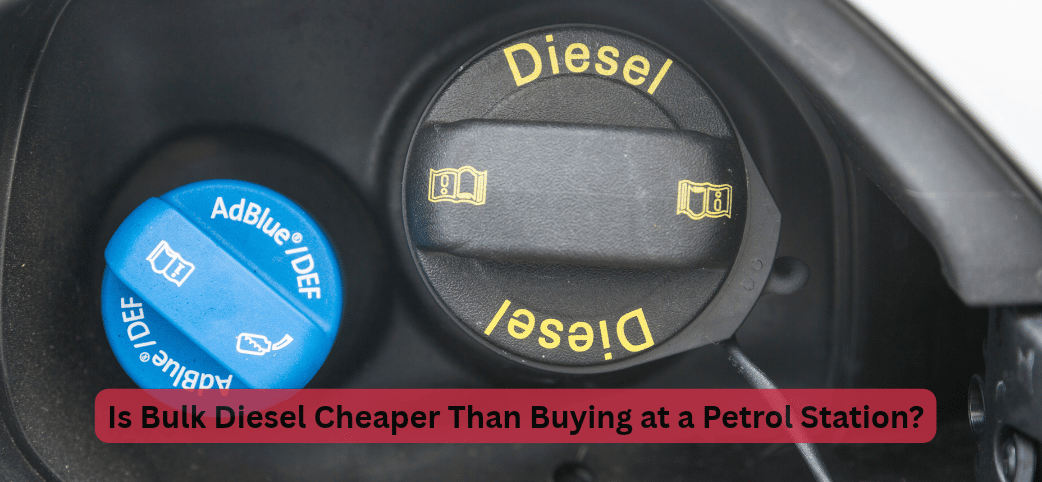
Bulk diesel can be cheaper than buying at a petrol station, but the saving depends on your delivered price, fuel consumption and storage costs. A lower price per litre does not automatically mean a lower total cost.
For a business with suitable storage and vehicles that regularly return to one depot, bulk delivery can make financial and operational sense. For a small fleet operating across different regions, petrol stations or a combination of depot and on-road refuelling may work better.
Our approach is to compare the complete cost before recommending a switch. You need to know what you will save on fuel, what you will spend managing it and how much of your monthly consumption can realistically move to your own tank.
How Can Bulk Diesel Reduce Your Fuel Costs?
Volume Pricing Can Lower the Delivered Rate
A larger order may qualify for a more competitive price per litre. It can also make delivery more efficient because the transport cost is spread across more litres.
However, there is no universal order size that guarantees a saving. Your location, delivery requirements, payment terms and supplier’s pricing structure all affect the quote.
Request prices for quantities that match your actual consumption and available storage. Ordering more than you can safely store or sensibly use is not a saving.
On-Site Refuelling Can Reduce Collection Time
The comparison should also account for the time and distance involved in visiting a petrol station.
A central depot may reduce separate refuelling trips, queues and driver time away from productive work. This can be particularly useful for agricultural equipment, construction machinery and vehicles that already return to the same yard.
Use your own operating records to calculate these benefits. If drivers already refuel along their normal route without a meaningful delay, the additional saving may be small.
Read our latest blog from Buy Diesel Direct: How Quickly Can a Diesel Supplier Deliver to My Site?
Compare Prices on the Same Basis
Use the Same Fuel Specification
Compare like-for-like fuel. A quote for one diesel grade should not be compared directly with a pump price for another without understanding the difference.
Check your engine manufacturers’ requirements and confirm the specification being supplied. Buy Diesel Direct markets 50ppm diesel, but the correct fuel for your equipment must be established before price becomes the deciding factor.
Keep VAT Treatment Consistent
Check whether each quoted price includes or excludes VAT. Comparing a VAT-exclusive bulk quote with a VAT-inclusive pump price creates an exaggerated saving.
For a straightforward cash comparison, ask for both totals including VAT and all applicable charges. If your business evaluates costs on another basis, apply that basis consistently and ask your accountant about your particular tax treatment.
Compare Current Quotes From the Same Area
Use an actual local pump price and a written bulk quote obtained close together. Diesel prices differ between sellers, and an old price may no longer represent what you would pay.
Record the quote date, validity period, delivery location, quantity and payment conditions. These details help you repeat the comparison accurately when prices change.
A Worked Example of Bulk Diesel Versus Petrol Station Costs
The following figures are illustrative. They are not current market prices or a Buy Diesel Direct quote. All amounts in this example include VAT.
- Required quantity: 10,000 litres.
- Petrol station price: R25.00 per litre.
- Bulk fuel price before delivery: R24.00 per litre.
- Bulk delivery charge: R2,000.
Buying 10,000 litres at the petrol station would cost R250,000.
The bulk fuel would cost R240,000, plus R2,000 for delivery, giving a total of R242,000. The effective delivered price would be R24.20 per litre.
The bulk purchase therefore saves R8,000, or R0.80 per litre, before accounting for storage, dispensing and other operating costs.
Why Smaller Orders Can Change the Result
Using the same illustrative rates, a 1,000-litre order would cost R24,000 for fuel plus R2,000 for delivery. That produces a delivered price of R26.00 per litre, above the R25.00 petrol station price.
Actual suppliers may use different prices and delivery charges for different quantities. The point is to calculate the full delivered cost rather than assuming the bulk rate is always cheaper.
What Storage Costs Should You Include?
Upfront Installation Costs
If you already have suitable storage, your decision may be relatively straightforward. If you need a new installation, include its full cost before calculating savings.
Depending on your site and proposed system, costs may include:
- A suitable diesel storage tank.
- Dispensing pumps, hoses, nozzles and metering.
- Filtration and water-management equipment.
- Foundations, protective barriers and electrical work.
- Required spill containment and fire protection.
- Professional design, installation and applicable approvals.
- Security and access controls.
Ask a qualified installation specialist to assess the property and applicable requirements. Tank design and approval conditions vary, so a general equipment estimate should not be treated as a complete installation quote.
Ongoing Operating Costs
Owning a fuel tank also creates ongoing responsibilities. Budget for maintenance, inspections, insurance, stock management and any testing required by your operating conditions.
Other costs can include pump electricity, filter replacement, financing and the working capital tied up in stored fuel.
Include losses supported by your own records. Avoid assuming a standard shrinkage percentage or treating every difference between tank readings and dispensing records as theft. Measurement methods, temperature changes and equipment faults may also need investigation.
How Do You Calculate the Payback Period?
Start with your monthly fuel saving after delivery charges. Deduct the additional monthly costs of running the storage and dispensing system. The remaining amount is your estimated net monthly saving.
Divide the upfront setup cost by that net monthly saving to estimate a simple payback period.
An Illustrative Payback Calculation
Suppose a business has the following figures, all assessed on a consistent VAT basis:
- Upfront installation cost: R120,000.
- Monthly diesel purchased through the depot: 10,000 litres.
- Saving after delivery charges: R0.80 per litre.
- Monthly fuel saving: R8,000.
- Additional monthly operating costs: R2,000.
- Net monthly saving: R6,000.
The simple payback period is R120,000 divided by R6,000, which equals 20 months.
This is a planning example, not a promised return. A full assessment should also consider financing, changing price differences, maintenance and how long the business expects to occupy the site.
Test What Happens if the Saving Falls
If the delivered saving falls to R0.40 per litre, the same business saves R4,000 on fuel each month. After R2,000 in additional operating costs, its net saving is R2,000 and the simple payback period increases to 60 months.
This is why we would not recommend installing storage based on one unusually attractive quote. Test the decision against lower savings and reduced consumption before committing.
When Is Bulk Diesel More Likely to Make Sense?
You Have Consistent Consumption
Predictable demand makes it easier to choose an appropriate order size and arrange replenishment. You can plan deliveries around actual usage rather than holding excess stock.
There is no single monthly consumption threshold that makes bulk buying worthwhile for every customer. A smaller user with existing storage may have a better case than a larger user facing expensive installation work.
Your Equipment Returns to a Central Site
A depot tank is most useful when vehicles and machinery can refuel there without unnecessary travel.
Count only the litres you can realistically purchase through the depot. If your fleet consumes 20,000 litres monthly but only 8,000 litres can be dispensed at the yard, use 8,000 litres in your savings calculation.
Your Site Already Has Suitable Infrastructure
Existing, well-maintained storage can remove much of the upfront investment. Check its condition, capacity, approvals and dispensing arrangements before relying on it.
An old tank that needs substantial rehabilitation may change the economics considerably.
When Might Petrol Stations Be the Better Choice?
Your Fuel Usage Is Low or Unpredictable
If consumption is limited, delivery charges and storage costs may outweigh the discount. Buying smaller quantities as needed can also preserve cash and avoid unnecessary stockholding.
For backup generators, base purchases on expected runtime and a sensible reserve. Buying a large quantity simply because the rate is lower may leave you managing fuel for much longer than intended.
Your Vehicles Rarely Return to One Depot
A tank at your main yard offers limited value if most vehicles operate elsewhere. Extra kilometres driven solely to collect cheaper fuel can erase the saving.
Compare available on-road fleet arrangements with your realistic depot costs. Include account fees, network coverage and any negotiated discounts in that assessment.
Your Premises Cannot Accommodate Storage
Space, access, landlord approval and applicable site requirements may prevent or restrict an installation.
Resolve those questions before purchasing equipment. A potentially attractive fuel discount cannot make an unsuitable property practical for bulk storage.
How Does Fuel Storage Affect the Saving?
Storage conditions influence fuel quality. Water ingress, contamination and poor stock management can lead to additional maintenance and testing costs.
Do not assume that every diesel batch has the same storage life. Fuel composition, tank condition, temperature and handling all affect the appropriate management plan.
Use suitable storage, monitor for water and contamination, maintain the dispensing system and rotate stock. Follow the fuel supplier’s and equipment manufacturer’s guidance, with specialist advice where needed.
The aim is to hold enough fuel for reliable operation without buying more than your business can reasonably manage.
Could a Mix of Bulk and On-Road Refuelling Work Better?
Many fleets do not need to choose one method exclusively. Depot fuel can support local operations and initial departures, while petrol stations cover longer journeys.
A Long-Haul Fleet With a Gauteng Depot
A transport business could refuel trucks at its Gauteng yard before departure, then use an appropriate fleet account for purchases elsewhere.
This captures depot savings where practical without forcing drivers to make unnecessary return trips.
A Business With Stationary and Mobile Equipment
A construction or agricultural operation may benefit from delivered fuel for machinery that cannot conveniently visit a petrol station. Road vehicles can continue using retail stations where that suits their routes.
Assess each group separately. The best arrangement for an excavator may differ from the best arrangement for a service bakkie.
What Can Buy Diesel Direct Offer?
Buy Diesel Direct markets bulk diesel supply, volume-based pricing and scheduled delivery services, with a strong focus on Gauteng. These options allow customers to request supply arrangements based on their consumption, location and receiving capacity.
Ask the team for a written quote covering:
- The diesel grade and specification.
- Your proposed order quantity.
- The full delivered price and VAT treatment.
- Any applicable additional charges.
- Delivery availability and lead time.
- Payment terms and quote validity.
Confirm the minimum delivery quantity for your order. Do not assume that tank supply, installation, rental, maintenance or a price-lock arrangement is included unless it has been specifically agreed.
What Information Do You Need Before Making the Switch?
Before deciding whether bulk diesel is cheaper for your business, gather:
- Your recent monthly diesel consumption.
- The litres that could realistically be dispensed at your site.
- Your actual petrol station prices and available fleet discounts.
- A current, fully itemised bulk delivery quote.
- The condition and capacity of any existing storage.
- Installation quotes if new infrastructure is required.
- Expected maintenance, insurance and financing costs.
- Your likely stock turnover and replenishment needs.
Use these figures to compare delivered costs, estimate net savings and test the payback period under different conditions.
Get a Bulk Diesel Quote Based on Your Actual Usage
Bulk diesel is cheaper when the delivered fuel saving and operational benefits exceed the cost of storing and dispensing it. That conclusion needs to come from your numbers.
Contact Buy Diesel Direct on 062 551 5386 or 079 891 8188, or email info@buydieseldirect.co.za. Share your delivery location, monthly consumption, preferred order size and existing storage details so the team can quote for your requirements.
Compare that quote with your current petrol station costs before deciding whether bulk delivery, retail refuelling or a combination offers the best value.