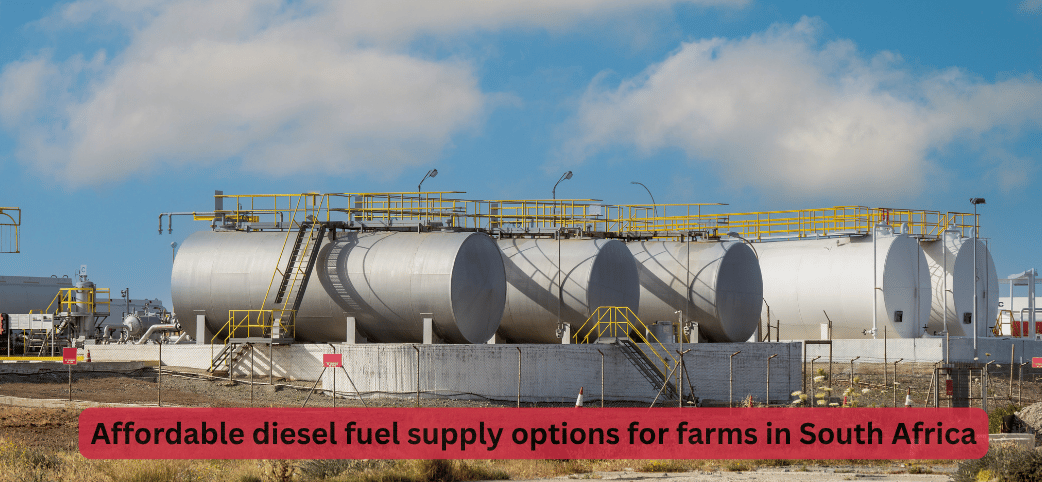
Affordable diesel supply starts with matching your buying arrangement to your farm’s consumption, storage and location. Bulk deliveries, smaller scheduled drops, local co-op purchases and mobile field refuelling can all offer value in the right circumstances.
At Buy Diesel Direct, we focus on the landed cost per litre: what the fuel costs once it reaches your farm, including delivery and applicable charges. We also consider the cost of collecting, storing and dispensing it.
A discounted bulk order is not automatically the cheapest solution if it ties up essential working capital or leaves more diesel in storage than you can use. Equally, frequent small purchases can become expensive when they require repeated transport and interrupt fieldwork.
Which Diesel Supply Options Should Farmers Compare?
Bulk Delivery Into On-Farm Storage
Bulk supply suits farms with suitable storage, safe tanker access and enough consumption to justify larger orders.
Larger deliveries can spread transport costs over more litres and reduce the need for repeated collection trips. However, the actual saving depends on location, order size, payment terms and the supplier’s delivery network.
Ask for a complete delivered quotation rather than assuming a fixed discount below local pump prices.
Buy Diesel Direct’s farm bulk arrangements generally start at 1,500 litres per drop, with larger loads available subject to the route, receiving capacity and vehicle requirements.
Smaller Scheduled Deliveries
Smaller deliveries can suit lower-consumption farms, limited storage and quieter months. They may also help preserve working capital when a large purchase would strain the farm’s budget.
The delivery cost per litre may be higher, but the total arrangement can still be more affordable than paying for additional storage or holding unnecessary stock.
Availability and minimum quantities vary by location. Confirm whether a local delivery service can meet your requirements before building your plan around it.
Local Co-Op or Fuel-Station Purchases
Buying locally can be practical for occasional use or a farm without dedicated bulk storage. Agricultural co-ops may also offer account terms or negotiated rates worth comparing.
Include collection costs in your assessment: vehicle fuel, labour, travel time and any interruption to field operations.
If you collect diesel using a bowser, confirm that the equipment and transport arrangements meet applicable requirements. Fuel collection still needs appropriate handling even when the journey is short.
Read our latest blog post: How to Find a Reliable Diesel Supplier Near Me
Mobile Refuelling in the Field
A suitable mobile bowser allows you to buy into central storage and move fuel to tractors or harvesters working farther away.
This can reduce time spent driving machinery back to the yard. The benefit depends on field distances, machinery use and how efficiently the bowser is operated.
Include the bowser’s purchase, maintenance, filtration, security and transport costs before deciding whether it pays for itself.
Match Supply to Your Farming Season
A grain farm’s diesel demand can change sharply between planting, harvesting and quieter periods. A buying arrangement that works during harvest may be unsuitable for the rest of the year.
Plan Peak-Season Demand
Prepare a rolling forecast using planned hectares, equipment hours and your own consumption records.
Tell your supplier when demand is likely to rise and discuss suitable delivery windows before operations become urgent.
A practical forecast should account for:
- The machines expected to operate.
- Likely working hours and shift lengths.
- Consumption at the expected workload.
- Fuel already available in storage.
- Confirmed delivery lead times.
- A reserve for delays or additional work.
Reduce Orders During Quiet Months
Do not maintain peak-season purchasing volumes simply to preserve a discount if consumption has fallen.
Smaller replenishments may be appropriate when they prevent excessive stockholding. Compare the additional delivery cost with the financing, storage and quality-management costs of buying more.
Where possible, negotiate seasonal flexibility rather than a rigid monthly commitment that does not match your farm.
What Information Helps Us Quote Accurately?
At Buy Diesel Direct, we can assess a proposal more effectively when farmers provide actual operating details.
- The farm’s trading name and delivery address.
- The nearest town and a location pin where useful.
- Average and peak monthly consumption.
- The preferred volume per delivery.
- Required diesel grade and equipment specifications.
- Tank capacities and available receiving space.
- Preferred delivery days and hours.
- Road, gate and turning-space restrictions.
- Preferred payment terms.
Photographs of the access route and filling area can help identify vehicle limitations before delivery.
A Farm Example Near Bronkhorstspruit and Delmas
One example from our work involved a mixed maize and soybean operation in the Bronkhorstspruit and Delmas area.
Reported consumption fell to approximately 2,000 litres per month during quieter periods, but rose to 25,000–30,000 litres during busy planting and harvesting months.
The farm originally used a 5,000-litre tank and ordered drops of roughly 4,000–4,500 litres. During peak operations, this meant frequent replenishment and limited room to absorb delivery delays.
The Changes Made
The arrangement combined additional storage, planned bulk replenishment and a mobile field bowser.
- A refurbished 15,000-litre tank increased nominal storage to 20,000 litres.
- Planned deliveries of approximately 15,000 litres became possible when sufficient receiving space was available.
- A 2,000-litre mobile bowser supported refuelling closer to working machinery.
- Smaller replenishments were used during quieter months, subject to local availability.
One 15,000-litre delivery would not cover an entire month consuming 25,000–30,000 litres. The larger tank created purchasing flexibility, while additional deliveries still had to be scheduled according to usage.
The Reported Benefits
The example included reported peak-period price savings of R2.10–R2.85 per litre compared with the previous buying arrangement. The customer also reported less travel back to the yard for refuelling.
Those figures are specific to that comparison. They are not guaranteed discounts for every farm.
At a saving of R2.10 per litre, a 15,000-litre delivery would produce R31,500 in gross purchasing savings. Two such deliveries would produce R63,000 before storage, financing and bowser costs.
That calculation shows why the arrangement deserved consideration. It does not establish the final net saving without the infrastructure and ongoing cost records.
Compare the Complete Cost of Each Option
Use the Same Quotation Basis
Ask suppliers to quote the same grade, volume, location and delivery window. Confirm whether VAT and transport are included.
Divide the total agreed cost by the supplied litres to establish an effective delivered rate.
For collected fuel, add your collection expenses before comparing it with delivery.
Include Storage and Finance Costs
Additional storage can improve purchasing flexibility, but its cost extends beyond the tank itself.
- Installation and applicable approvals.
- Suitable containment and site preparation.
- Pumps, meters and filtration.
- Inspection and maintenance.
- Insurance and security.
- Finance costs and working capital.
Use total investment and realistic net savings to estimate payback. A larger tank should solve a defined operating need rather than simply create room for discounted stock.

Choose the Correct Diesel for Your Equipment
Follow the fuel specification for each tractor, harvester, pump or generator. Do not choose a grade solely because it is cheaper.
Some older engines permit 500ppm diesel, while other equipment requires lower-sulphur fuel. Certain modern engines require a maximum sulphur content below 50ppm.
Check the exact model’s instructions or confirm requirements with the dealer. Age or an emissions-tier label alone is not a sufficient purchasing specification.
Every grade also needs suitable cleanliness and quality. Older machinery remains vulnerable to water, dirt and adulterated fuel.
Would a Farm Buying Group Help?
Neighbouring farms may be able to coordinate deliveries or negotiate a combined purchasing arrangement. This can improve route efficiency where individual orders are small.
Agree on the practical details before ordering:
- Who contracts with and pays the supplier.
- Whether deliveries go to separate farms or an approved central point.
- How volumes are measured and allocated.
- Which party holds and insures the stock.
- How invoices and usage records are maintained.
- Whether any redistribution creates additional licensing or tax obligations.
A multi-drop arrangement may be simpler than storing neighbours’ fuel centrally. Ask the supplier which approach is feasible for the route.
Reduce Fuel Losses Before Chasing Another Discount
Track What Enters and Leaves Storage
Reconcile delivery records, tank levels and dispensing logs. Record fuel issued to each machine and compare consumption over similar tasks.
Unexpected differences should trigger investigation, not an immediate accusation of theft. Workload, idling, measurement errors, leaks and maintenance can also affect consumption.
Lockable access, suitable anti-siphon protection and controlled dispensing can improve accountability.
Protect Fuel From Water and Dirt
Maintain caps, seals and appropriate tank ventilation. Use filtration and water separation suited to the dispensing system.
Inspect mobile bowsers as carefully as static tanks. Clean fuel can become contaminated during field handling.
Use approved drain points and procedures for water removal. Do not change a tank’s angle or supports to create drainage without an engineering assessment.
Bring Fuel to the Work Where It Makes Sense
Consider field refuelling when repeated journeys to the yard consume significant time and fuel.
Plan a safe receiving area and follow machinery shutdown and refuelling instructions. Convenience must be supported by suitable equipment and trained operators.
Set an Ordering Trigger Based on Consumption
A fixed trigger such as 25% tank capacity can be useful only if it provides enough usable fuel for your delivery lead time and reserve.
Calculate the reorder level from expected consumption during that period, adding a safety allowance and accounting for unusable stock.
Review the calculation when planting or harvest starts. The same fuel level can represent several days of quiet-season work but only a short period during extended shifts.
A rolling 14-day forecast can help you see those changes early.
Understand the SARS Diesel Refund Scheme
Eligible farming activities may qualify for refunds of specified fuel-levy and Road Accident Fund levy amounts. A refund does not reimburse the entire diesel purchase price.
Current Registration Changes
SARS implemented its dedicated diesel-refund registration platform in September 2026, separating registration from the VAT-linked model. Existing users must register on the new solution; registration is not automatic.
The changes also introduce electronic relationships between diesel users and registered sellers. Confirm your registration and supplier relationship requirements with SARS or your tax practitioner.
What “100% of Eligible Diesel” Means
From 1 April 2026, SARS states that qualifying on-land users can claim the applicable refund on 100% of eligible diesel used in qualifying activities.
This concerns eligible litres and applicable levy refunds. It does not mean every litre purchased qualifies, or that SARS refunds 100% of your fuel bill.
Fuel used for personal or other non-qualifying activities must be distinguished from eligible use.
Keep Purchase and Usage Records
Supplier invoices support the purchase record, but you also need evidence of how fuel was used.
Maintain appropriate delivery, storage, dispensing and activity records. Your accountant or tax practitioner should confirm eligibility, calculation and the current submission procedure.
Buy Diesel Direct supplies itemised invoices and delivery records to support your recordkeeping. These documents do not, by themselves, establish entitlement to a refund.
What Buy Diesel Direct Provides for Farms
We handle fuel sourcing and delivery arrangements through our logistics network. Bulk supply is available across agricultural areas in provinces including Gauteng, Mpumalanga, Free State, North West, Limpopo and KwaZulu-Natal, subject to location and order confirmation.
Our commercial proposals can include:
- Bulk deliveries starting from approximately 1,500 litres where available.
- Larger tanker loads suited to receiving capacity and access.
- Scheduled seasonal replenishment.
- Prepayment or COD arrangements.
- Credit facilities subject to assessment and approval.
- Itemised invoices and delivery documentation.
Tank installation, bowser provision, infrastructure engineering and tax compliance require appropriate specialists. We can discuss coordination, while qualified providers handle work within their expertise.
Request a Farm Diesel Supply Quote
Send Buy Diesel Direct your farm location, peak and off-season consumption, preferred delivery size, tank details and payment requirements.
We can then discuss a supply arrangement that suits your actual farming cycle. The aim is a competitive landed cost, sufficient reserve for field operations and manageable stockholding throughout the year.