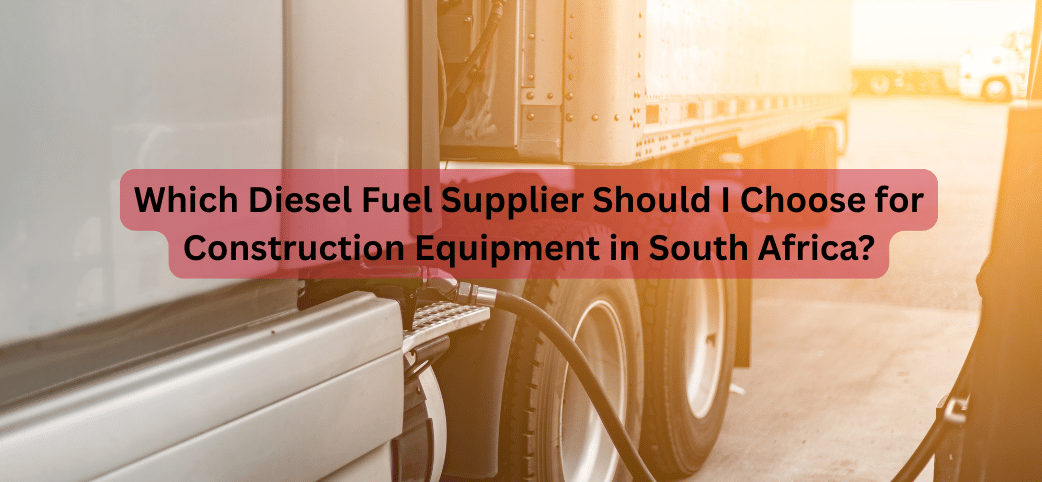
The best diesel fuel supplier for construction equipment is not always the company offering the lowest price per litre. You need a licensed supplier that delivers clean 50ppm diesel, provides reliable delivery times, verifies every litre supplied and understands the practical challenges of working on a construction site. Chat to us at Buy Diesel Direct for all your diesel needs
Fuel can account for more than 30% of a construction site’s operating costs. However, the cost of diesel is only one part of the decision. A late delivery can leave excavators, TLBs, graders, dump trucks and generators standing idle. Contaminated diesel can damage injectors, fuel pumps and filters. A short delivery can quietly increase your real cost per litre without appearing on the invoice.
In our view, the right supplier is the one that protects your machinery and keeps your project moving. Saving a few cents per litre means very little if your equipment stops working or your project misses an important deadline.
Start With the Needs of Your Construction Site
Before comparing diesel suppliers, work out exactly what your site requires. A residential development using one TLB and a generator has different fuel needs from a road construction project running excavators, articulated dump trucks and dozers across several shifts.
Give each potential supplier accurate information about:
- Your construction site location
- Your estimated daily and monthly diesel consumption
- The type of equipment operating on the site
- The diesel grade required by the equipment manufacturers
- Your preferred delivery frequency
- The minimum and maximum delivery quantities
- Road conditions and tanker access
- Whether you have an on-site storage tank
- Whether you need direct-to-equipment refuelling
- Your working hours, including weekends and night shifts
A dependable supplier should use this information to recommend a practical delivery plan. If the company gives you a price without asking how your site operates, it may not understand the risks involved.
Choose a Supplier That Can Provide the Correct Diesel
Confirm Whether Your Equipment Requires 50ppm Diesel
Many modern construction machines require 50ppm low-sulphur diesel. This includes newer equipment from manufacturers such as CAT, Bell, Komatsu, Volvo and other leading brands.
Modern diesel engines often use sensitive high-pressure fuel systems and emissions-control components. Using contaminated fuel or the wrong diesel grade can cause poor performance, blocked filters and expensive mechanical damage. It may also affect the equipment manufacturer’s warranty.
Ask the supplier to confirm the diesel grade in writing. Do not accept a verbal promise that the fuel is “standard diesel” or “the same fuel everyone uses.” Your order confirmation, delivery note and invoice should clearly identify the product being supplied.
Ask Where the Diesel Comes From
A reliable supplier should have a traceable supply chain. Ask whether the diesel comes from a recognised refinery or authorised fuel depot. The supplier should be able to provide supporting loading documents when requested.
You should be cautious if a supplier refuses to explain where its diesel comes from, operates only as an unidentified broker or offers fuel at a price that appears impossible under current market conditions.
Request Fuel Quality Documents
Ask whether the supplier can provide a Certificate of Analysis or other relevant proof of fuel quality. The documentation should support the diesel grade, sulphur content and key quality measurements applicable to the product.
You should also establish what happens if you suspect a contaminated delivery. The supplier should have a written process for sampling, testing, investigating and resolving a dispute.
Do Not Choose a Diesel Supplier on Price Alone
Construction companies understandably watch fuel prices closely. When a site consumes thousands of litres each month, even a small difference in the price per litre affects the project budget.
However, an unusually cheap diesel quote should raise questions.
A low price may hide one or more of the following problems:
- Adulterated or contaminated diesel
- Diesel mixed with illuminating paraffin
- Fuel obtained through an unverified supply chain
- Short delivery quantities
- Uncalibrated delivery meters
- Additional delivery charges not shown in the original quote
- Unreliable delivery times
- No support when a problem occurs
Compare the total delivered cost rather than looking only at the advertised price. Ask whether the quote includes transport, pumping, after-hours delivery, small-order fees and any applicable account charges.
Read Our Latest Blog: How to Find a Reliable Diesel Supplier Near Me
A trustworthy supplier should explain how its price is calculated and how monthly diesel price changes will affect your rate. The pricing method should appear clearly in your supply agreement.
Understand the Risk of Contaminated Diesel
Contaminated diesel can turn a small saving into a major repair bill. The risk becomes more serious when the same delivery enters a central storage tank and is then distributed across the entire fleet.
For example, consider a road rehabilitation site running CAT excavators, Bell articulated dump trucks, Komatsu dozers and diesel generators. If a contaminated batch enters the site tank, several machines can develop problems within the same period.
Possible warning signs include:
- Fuel filters blocking faster than usual
- Sudden power loss
- Rough idling
- Difficulty starting equipment
- Abnormal exhaust smoke
- Injector or fuel-pump failures
- Water or sediment found in fuel filters
Repairs to modern high-pressure fuel systems can be extremely expensive. The project may then suffer additional losses through equipment hire, idle operators, missed production targets and late-completion penalties.
This is why we believe fuel quality should carry more weight than a small price difference. Cheap diesel stops being cheap the moment it damages one machine.
Check the Supplier’s Legal Compliance
Ask for a Valid Wholesale Fuel Licence
Ask the supplier for proof that it holds the licences required to operate as a wholesale fuel distributor in South Africa. Check that the company name on the licence matches the business sending the quote and invoice.
Be cautious when a salesperson claims to trade under another company’s licence or avoids providing formal business details. You need to know which legal entity is responsible for the fuel, delivery and invoice.
Request Supporting Company Documents
Depending on your company’s procurement requirements, you may also ask for:
- Company registration documents
- Tax compliance information
- B-BBEE documentation
- Public liability insurance
- Relevant transport and dangerous-goods documentation
- Driver training and permit information
- Vehicle and flow-meter calibration records
Larger construction projects may require these documents before approving a new vendor. Collecting them before the first order prevents unnecessary delays when your site needs fuel urgently.
Make Sure the Supplier Can Reach Your Equipment
A fuel supplier may offer good diesel at a competitive price but still be the wrong choice if its trucks cannot enter your site.
Large tankers work well for established sites with wide access roads, stable ground and large storage tanks. They may struggle on muddy roads, steep inclines, narrow entrances or sites with limited turning space.
Ask the supplier which delivery vehicles it operates. Depending on your site, you may need:
- A smaller rigid fuel truck
- A mobile bowser
- A vehicle capable of handling poor site conditions
- A long delivery hose
- Direct-to-plant refuelling
- Delivery into a central skid tank
Confirm Whether Wet-Hosing Is Available
Wet-hosing means pumping diesel directly into individual machines rather than delivering everything into one storage tank. This can work well for short-term projects, sites without permanent storage and equipment spread across a large working area.
Ask whether the service is included in the diesel price. Some suppliers charge extra for the time spent moving between machines. You should also confirm whether the driver may travel through the active work area and what site supervision will be required.
Verify Every Litre Delivered
Fuel theft and short deliveries do not always involve dramatic incidents. A small difference on every delivery can become a substantial loss over a long project.
Check the Delivery Truck’s Meter
The delivery vehicle should use a properly calibrated flow meter. Ask for proof of calibration and check whether the certificate applies to the truck making your delivery.
Before pumping starts, your authorised site representative should confirm that the meter has been reset to zero. The final meter reading should match the litres recorded on the delivery note.
Measure Your Storage Tank
If diesel is being delivered into a central tank, record the tank level before and after delivery. A manual dipstick, calibrated tank chart or electronic tank-monitoring system can help you compare the measured increase with the invoiced quantity.
Tank readings can be affected by the tank’s shape, angle, temperature and remaining fuel, so you need a consistent measurement process. Assign this responsibility to one or two trained employees rather than allowing anyone on site to accept deliveries.
Take a Sample Before Discharge
Many construction companies use a simple clear-and-bright inspection before accepting fuel. A sample is drawn into a clean, transparent container and checked for visible water, cloudiness or sediment.
This visual check cannot detect every form of contamination and does not replace laboratory testing. It can, however, identify an obvious problem before the diesel enters your main tank.
Your delivery procedure should require the site representative to:
- Confirm the supplier and delivery vehicle.
- Check the delivery documents.
- Confirm the ordered diesel grade.
- Inspect the meter and calibration information.
- Take and label a fuel sample.
- Record the storage tank level.
- Supervise the delivery.
- Sign the delivery note only after completing the checks.
Compare National and Regional Diesel Suppliers
When a National Supplier May Be the Better Choice
A large national supplier may suit civil engineering companies operating several projects across South Africa. One account and pricing structure can simplify procurement, reporting and supplier management.
National suppliers may offer:
- Access to a broad supply network
- Consistent procedures across several provinces
- Centralised billing
- Capacity for large-volume deliveries
- Formal quality and compliance systems
The possible disadvantages include higher minimum order quantities, slower account approvals and less flexibility when a site needs a small or unusual delivery. Large tankers may also be unsuitable for difficult construction-site access.
When a Regional Supplier May Be the Better Choice
A reputable regional supplier may offer a faster and more flexible service. This can suit local building contractors, smaller developments and projects with changing fuel requirements.
Regional suppliers may be more willing to provide:
- Smaller delivery quantities
- Faster emergency assistance
- Direct communication with decision-makers
- Wet-hosing services
- Flexible delivery arrangements
- Vehicles suited to restricted site access
The main concern is that regional suppliers differ widely in quality, licensing and sourcing. A smaller company should not automatically be viewed as risky, but you must complete the same compliance and fuel-quality checks before placing an order.
The best choice depends on your site. A large supplier is not automatically better, and a regional supplier is not automatically cheaper or more flexible. Compare each company against your actual operating requirements.
Ask About Delivery Times and Emergency Support
One late fuel delivery can stop an entire production cycle. Excavators may be unable to load material, dump trucks may stop hauling and generators may no longer power site facilities.
Ask each supplier:
- What is your normal order lead time?
- Do you guarantee delivery within a specific period?
- Can you deliver after hours?
- Do you operate on weekends and public holidays?
- Do you provide emergency deliveries?
- Who should we contact when an urgent delivery is needed?
- What happens if your allocated truck breaks down?
- Do you have access to alternative depots during supply disruptions?
- Will you notify us early if a delivery will be late?
A general promise of “fast delivery” is not enough. If uninterrupted fuel supply is critical, include measurable delivery times in the service-level agreement.
Review the Payment and Credit Terms
Construction cash flow can become difficult when client payment certificates are delayed. Suitable credit terms can help, but they should not encourage uncontrolled fuel spending.
New customers may need to pay upfront or on delivery while the supplier completes its credit assessment. Established customers may qualify for 14-day or 30-day terms, depending on trading history, financial information and credit insurance approval.
Check the following before signing:
- The approved credit limit
- The payment period
- When the payment period starts
- Interest charged on overdue accounts
- Whether personal or company guarantees are required
- Whether the account can be suspended without notice
- How price changes are communicated
- How delivery disputes affect payment
- Whether fuel surcharges or account fees apply
Your credit limit should cover normal consumption plus a reasonable allowance for increased activity. A low credit limit can interrupt supply before the end of a billing cycle.
Consider On-Site Diesel Storage
A compliant on-site tank can reduce emergency orders and give your site better control over its fuel supply. Common options include skid tanks with pumps, filters and tank-level monitoring.
The correct tank capacity depends on your daily consumption, available space and normal delivery frequency. The tank should hold enough diesel to protect the site against reasonable delivery delays without encouraging excessive stockholding.
Before installing a tank, assess:
- Applicable municipal and national requirements
- Fire safety
- Spill containment
- Security and access control
- Vehicle access for deliveries
- Tank condition and certification
- Pump and meter calibration
- Water drainage and filtration
- Fuel reconciliation procedures
Ask who owns the tank, who maintains it and what happens when the supply agreement ends. A “free” tank may be linked to minimum volumes, contract periods or exclusivity conditions.
Put the Important Commitments Into a Written SLA
A service-level agreement should turn the supplier’s promises into measurable obligations. It should also explain what happens when either party fails to meet those obligations.
Your SLA should cover:
- The required diesel grade
- Approved delivery locations
- Normal and emergency delivery times
- Minimum order quantities
- Pricing and monthly adjustments
- Delivery charges
- Fuel-quality documentation
- Meter calibration requirements
- Sampling and testing procedures
- Processes for quantity disputes
- Processes for contaminated fuel claims
- Insurance responsibilities
- Payment terms
- Account suspension conditions
- Contract termination procedures
Be careful with promises of “zero downtime.” No supplier can control every refinery shortage, road closure, strike or vehicle breakdown. A more useful SLA defines realistic response times, communication requirements, backup arrangements and remedies for failures that fall within the supplier’s control.
Red Flags That Should Make You Walk Away
Do not ignore warning signs because your site urgently needs fuel. A rushed decision can create a much larger problem.
Consider rejecting the supplier if it:
- Refuses to provide licensing information
- Cannot explain where the diesel comes from
- Offers a price far below the current market without a reasonable explanation
- Requests payment into an unrelated person’s bank account
- Cannot provide proper tax invoices
- Uses delivery vehicles without verified meters
- Refuses to let your representative inspect the meter
- Will not allow a sample to be taken
- Cannot confirm whether the product is 50ppm or 500ppm diesel
- Uses vague delivery promises
- Has no process for handling contamination claims
- Pressures you to accept an immediate delivery before completing checks
Questions to Ask Before Choosing a Diesel Fuel Supplier
Use the following questions when comparing suppliers:
- Do you hold a valid wholesale fuel licence?
- Which refinery or authorised depot supplies your diesel?
- Can you provide proof of the fuel grade and quality?
- Do you consistently supply 50ppm diesel?
- What is your minimum delivery quantity?
- Which delivery vehicles can access my site?
- Do you offer direct-to-equipment refuelling?
- How quickly can you complete a normal delivery?
- Can you assist after hours or during an emergency?
- Are your truck meters calibrated and verifiable?
- How do you handle fuel-quality or quantity disputes?
- What charges are added to the quoted diesel price?
- Can you provide an on-site storage tank?
- What credit terms are available?
- Can you provide references from other construction clients?
Test a New Supplier Before Awarding a Large Contract
Do not move your entire fuel requirement to an unfamiliar supplier immediately. Start with a controlled trial order where possible.
During the trial, monitor:
- How quickly the supplier confirms the order
- Whether the truck arrives at the agreed time
- The condition and suitability of the delivery vehicle
- The driver’s safety procedures
- The accuracy of the delivery documents
- The fuel sample and visible fuel condition
- The quantity received
- The performance of your machinery after delivery
- How quickly the supplier resolves questions
Keep the sample and delivery records for an agreed period. If a mechanical problem develops, these records can assist with an investigation.
Which Diesel Supplier Should You Choose?
Choose the diesel supplier that provides the best combination of verified fuel quality, legal compliance, accurate delivery volumes, suitable delivery vehicles and dependable support.
Your final decision should be based on five priorities:
- Fuel quality: The supplier must provide the correct diesel for your construction equipment through a traceable supply chain.
- Delivery reliability: The company must meet your site’s normal and emergency delivery requirements.
- Quantity control: Every litre should pass through a properly calibrated meter and be supported by clear documentation.
- Site capability: The supplier’s vehicles, hoses and drivers must be able to operate safely within your site conditions.
- Total cost: Compare the delivered price together with the financial risk of delays, shortages and contaminated fuel.
For a small local project, a vetted regional supplier with flexible delivery quantities may provide the best service. For a multi-provincial construction company using large volumes, a national supplier may offer stronger coverage and centralised billing. Some contractors use both, with a primary national supplier and an approved regional backup for urgent or difficult deliveries.
The cheapest supplier is rarely the best supplier if it cannot prove the origin of its diesel, account for every litre or deliver when the site needs fuel. Choose the company that gives you confidence that your equipment will keep working and your project will remain on schedule.
Request a Construction Site Diesel Quote
When requesting a diesel quote, provide your site location, expected order quantity, equipment list, required diesel grade, access conditions and preferred delivery date. This allows the supplier to quote accurately and confirm whether the correct delivery vehicle is available.
A reliable South African diesel supplier should be willing to discuss your operating requirements before asking you to commit. The goal is not simply to deliver diesel. The goal is to build a fuel supply plan that protects your equipment, controls your costs and prevents avoidable downtime.