
Yes, you can get diesel delivered directly to your generator, provided the supplier can safely access its filling point and the receiving tank has enough available capacity for the order. Buy Diesel Direct offers diesel delivery to generators, storage tanks and commercial sites across Gauteng.
Direct delivery can save you the time and effort of collecting fuel yourself. However, a successful delivery depends on more than giving the driver your address. Tank capacity, vehicle access, hose reach and safe refuelling arrangements all need to be checked before dispatch.
Our advice is to explain your setup when you book, particularly if this is your first delivery. A few photographs and accurate measurements can prevent a truck arriving with equipment that cannot reach your tank. For all your diesel delivery needs contact is TODAY
Which Generator Setups Can Receive Diesel Deliveries?
Home and Residential Estate Generators
Homeowners and residential estates can arrange diesel deliveries for suitable backup generator installations. The main practical questions are whether the tank can accept the required quantity and whether the delivery vehicle can reach a safe filling position.
For estates, confirm visitor registration, delivery hours and vehicle restrictions beforehand. Security clearance does not necessarily mean a truck can physically reach your generator.
Office Parks, Shops and Warehouses
Commercial generators may have larger tanks, making direct deliveries practical for businesses that need regular refuelling. However, filling points can be located behind buildings, inside service yards or below ground.
Tell the supplier about basement entrances, loading bays, restricted receiving hours and any site induction requirements. These details affect which vehicle and equipment are suitable.
Industrial and Agricultural Installations
Factories, farms and other large sites may receive fuel into a generator’s tank or into a separate storage system that supplies it.
Identify the correct receiving tank when booking. The supplier needs to understand where the fuel will be discharged, how that point is accessed and how much usable space is available.
Read our latest blog: Best diesel fuel suppliers for commercial fleets in South Africa
Can Your Generator Tank Hold the Minimum Delivery?
Check Available Space, Not Just Total Capacity
A tank’s stated capacity is not the same as the amount you can order. You must account for fuel already inside and the tank’s permitted filling level.
For example, a tank with a nominal capacity of 250 litres cannot automatically accept a 250-litre delivery. Your site representative should establish the safe available capacity using the equipment’s approved measurement procedure.
Buy Diesel Direct’s supplier page lists a 200-litre minimum order, while its website quote forms begin at 350 litres. Confirm the applicable minimum for your delivery location and setup when requesting a quote.
What If Your Generator Has a Small Tank?
A generator with a 20-litre, 50-litre or 80-litre tank may not have enough capacity to meet a commercial supplier’s minimum delivery quantity.
Ask Buy Diesel Direct whether a suitable delivery arrangement is available. Do not assume the driver can dispense below the agreed minimum or leave the remaining fuel in unsuitable containers.
If your ongoing consumption justifies additional storage, speak to a qualified fuel installation specialist about an appropriate system. Tank size, positioning, fire protection, spill containment and local requirements need assessment before installation.
A separate storage tank should solve a genuine operational need. It should not be installed simply to meet a delivery minimum without considering safe storage and stock turnover.
Can the Delivery Vehicle Reach Your Generator?
Measure the Actual Hose Route
Measure the route from the nearest safe vehicle parking position to the filling point. Include corners, ramps and other obstacles rather than measuring a straight line through the building.
Confirm the required reach with the supplier. Hose lengths and pumping capabilities vary between delivery vehicles, so an advertised or assumed distance may not apply to your order.
Useful access information includes:
- The distance from safe parking to the filling point.
- Gate width and overhead clearance.
- Basement or covered parking restrictions.
- Steep gradients, soft ground or narrow turning areas.
- Steps, walls or pedestrian routes along the hose path.
- Any restrictions on stopping outside the property.
Do Not Assume a Tanker Can Use Your Driveway
A delivery vehicle needs suitable ground, clearance and manoeuvring space. A driveway that accommodates passenger cars may not be suitable for a loaded fuel vehicle.
Send photographs before booking if access is tight or uncertain. Let the supplier assess vehicle suitability rather than leaving the decision until arrival.
When Might You Need a Remote Filling Point?
A generator in a basement, enclosed courtyard or difficult service area may benefit from a professionally designed remote filling point.
This allows fuel to enter through an accessible connection linked to the receiving tank. However, it requires proper design, suitable piping, overfill controls and an assessment of the installation’s requirements.
Ask a qualified specialist to evaluate the system. Do not improvise a permanent filling line or assume that a longer delivery hose will solve every access problem.
Must You Turn the Generator Off Before Refuelling?
For direct refuelling of a generator’s integral tank, plan for shutdown and the cooling period required by the manufacturer. Do not open the fuel cap or attempt refuelling while the machine is running unless the equipment is specifically designed for that procedure and an approved process permits it.
Some larger installations use separate bulk storage and engineered day-tank transfer systems. Their operating procedures differ from pouring or pumping fuel directly into a generator’s integral tank.
Confirm the receiving arrangement with the supplier and your generator technician before delivery. The driver should not be expected to decide how an unfamiliar installation can safely remain operational.
Plan the Interruption Before the Truck Arrives
If your business relies on continuous backup power, arrange refuelling around an approved shutdown window or your site’s alternative power arrangements.
Have an authorised person available who understands the generator’s shutdown, automatic-start isolation and restart procedures. Allow the cooling time specified by the manufacturer rather than assuming that a few minutes will always be sufficient.
Which Diesel Grade Should You Order?
Buy Diesel Direct markets 50ppm diesel. Before ordering, check that the supplied fuel meets the requirements of your particular generator engine.
Sulphur content is only one part of a fuel specification. Cleanliness, water content and other properties also matter. Some engines require a lower sulphur limit, so “modern generator” is not enough information to select the correct grade.
Provide the generator’s make, model and fuel requirements if you are unsure. Obtain guidance from the manufacturer or an authorised technician rather than relying only on a general product description.

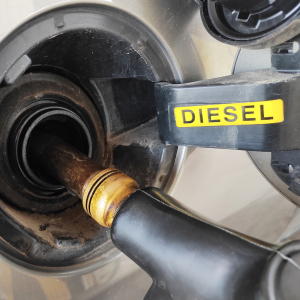

Two Illustrative Generator Delivery Examples
The following examples explain common planning problems. They are hypothetical scenarios, not documented Buy Diesel Direct customer deliveries.
A Basement Generator With Restricted Access
An office manager books diesel for a generator in a basement parking area. When the delivery vehicle arrives, it cannot pass beneath the entrance height restriction. The alternative parking position is also beyond the confirmed hose reach.
The delivery cannot proceed as planned, even though fuel and transport are available.
The practical lesson is to check both vehicle clearance and the complete hose route before accepting a booking. Photographs, measurements and a suitable site assessment can identify the problem early.
A Small Generator With Professionally Installed Storage
A homeowner uses a generator whose integral tank is too small for the supplier’s normal minimum order. After assessing consumption and site requirements, a qualified installer provides a suitable external storage arrangement with an accessible filling point.
The homeowner can then order a quantity that fits the storage system’s safe available capacity, subject to the supplier accepting the arrangement.
The lesson is to assess storage, access and fuel transfer together. Extra capacity helps only when the complete installation is suitable and correctly managed.
What Should You Have Ready When Booking?
Gather the following details before contacting Buy Diesel Direct:
- Your full delivery address and a location pin for the correct entrance.
- The generator make, model and required fuel specification.
- The requested litres and safe available receiving capacity.
- Photographs of the entrance, vehicle parking position and filling point.
- The measured distance along the proposed hose route.
- Any estate, security or site induction requirements.
- Your preferred delivery window.
- A contact number for the authorised person receiving the fuel.
- Your approved shutdown and refuelling arrangements.
If you are running low, explain your estimated remaining runtime and current consumption. This helps the supplier assess urgency, but it does not establish a guaranteed arrival time.
What Should You Confirm Before Accepting the Quote?
The Full Price and Payment Terms
Ask whether the quote includes VAT and delivery, and whether any additional charges apply to your specific order.
Confirm any applicable charges for urgent service, after-hours delivery, waiting time or special access requirements. Do not assume these fees exist, or that they are included, without checking.
Ask which payment methods are accepted and whether payment must clear before dispatch. Card facilities and account terms should be confirmed rather than assumed.
The Delivery Window and Suitable Equipment
Confirm that the assigned vehicle can access your site and carries equipment suitable for the agreed filling arrangement.
Ask for the estimated arrival window, who to contact for an update and how delays will be communicated. Coordinate any planned generator shutdown with the delivery team while following your site’s approved procedures.
What Happens When the Driver Arrives?
Your authorised representative should meet the driver and identify the agreed receiving tank. Before transfer begins, the receiving arrangements and available capacity need to be checked under the supplier’s and site’s procedures.
The receiving process should include:
- Confirming the delivery is for the correct site and tank.
- Checking the ordered fuel grade and quantity.
- Confirming that access and refuelling conditions are safe.
- Following the agreed quantity measurement process.
- Keeping people clear of hoses and delivery equipment.
- Reviewing and retaining the delivery documentation.
If the driver identifies an unsafe condition, resolve it before proceeding. An urgent need for power does not make an unsuitable receiving arrangement safe.
Arrange Direct Generator Refuelling With Buy Diesel Direct
Direct diesel delivery can be a practical option for homes, estates and businesses with suitable generator installations. The key is confirming capacity, access and safe refuelling arrangements before the vehicle is dispatched.
Contact Buy Diesel Direct on 062 551 5386 or 079 891 8188, or email info@buydieseldirect.co.za. Provide your location, required litres and setup details so the team can confirm delivery availability, pricing and the arrangements for your site.