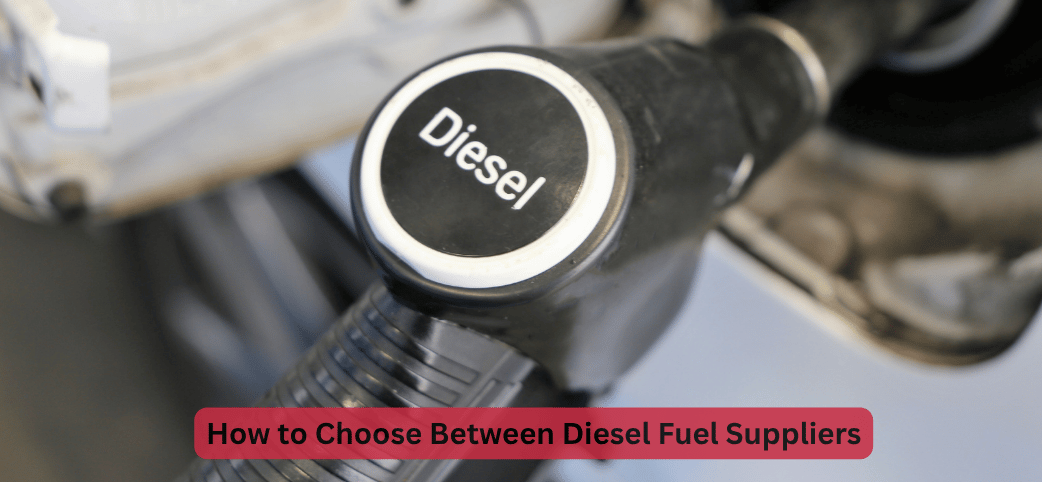
To choose between diesel fuel suppliers, first verify their legitimacy, fuel quality and sourcing. Then compare the complete delivered price, delivery arrangements, measurement records and payment terms. Test your preferred supplier with a short trial before committing to a long-term agreement.
At Buy Diesel Direct, our view is that the cheapest quote only offers value if the correct fuel arrives, in the agreed quantity, when your operation needs it. A small saving per litre can disappear quickly when a late delivery stops production or contaminated diesel damages equipment.
Whether you manage a transport fleet, construction site, farm or backup generator, use the following process to compare suppliers on the factors that affect your business.
Start With Fuel Quality and Sourcing
Before discussing discounts, establish exactly what the supplier intends to deliver and how they can demonstrate its quality.
Diesel adulteration is a genuine concern in South Africa. However, a low price alone does not prove that fuel is contaminated. Treat an unusually large discount as a reason to investigate rather than as evidence of wrongdoing.
Ask each supplier:
- What diesel grade is included in the quotation?
- Where is the fuel sourced?
- What quality documentation supports the supplied product?
- How is the delivered load linked to those records?
- What happens if an independent test identifies a quality problem?
A dependable supplier should explain their supply chain clearly. A familiar oil-company name on a quotation is not enough if the supplier cannot explain how the fuel reaches your tank.
Confirm the Diesel Grade Your Equipment Requires
Do not compare a quotation for 50ppm diesel with one for 500ppm diesel as though they cover the same product. Confirm your equipment manufacturer’s fuel requirements and request the appropriate grade in writing.
The sulphur designation is only one part of fuel quality. It does not establish that diesel is free from water, sediment or adulterants.
Your purchase order, quotation and delivery note should identify the agreed grade consistently.
Read our latest blog post: Emergency Diesel Fuel Delivery: What to Know
Check the Supplier’s Documents Before Paying
Our recommendation is to request the supporting paperwork early. It is easier to resolve uncertainty before dispatch than after fuel has entered your storage tank.
Verify the Petroleum Wholesale Licence
Ask for the applicable petroleum wholesale licence and check the licence holder’s identity against the company supplying and invoicing you. Older documents may refer to the Department of Mineral Resources and Energy, while current petroleum licensing resources are published by the Department of Mineral and Petroleum Resources.
If different company names appear, ask for a clear explanation of the relationship. Do not assume that a trading name, intermediary or partner arrangement is automatically unlawful, but establish who is responsible for the transaction and which authorisation applies.
A wholesale licence is generally valid while the business remains operating, rather than requiring routine renewal like an annual certificate. If its status is uncertain, verify it with the issuing authority.
The licence is an important check, but it does not prove that the supplier has fuel available, reliable transport or acceptable product quality.
Request Relevant Quality Records
Ask for a Certificate of Analysis or other suitable quality documentation that can be traced to the product being supplied.
Check:
- The product description and diesel grade.
- The laboratory or organisation issuing the report.
- The sample date and relevant batch or product reference.
- The specification against which the results were assessed.
- How the document relates to your intended delivery.
A recently dated report is not useful if it covers unrelated fuel. Equally, document age should be considered alongside stock rotation and traceability rather than judged against an arbitrary expiry period.
Do not assess compliance from sulphur content, density or flash point alone. Where quality is disputed or the risk is significant, use a competent laboratory to assess the relevant requirements of the applicable diesel specification, including SANS 342.
Ask How the Load Can Be Traced
Request appropriate loading, upliftment or supply-chain records. These should help establish where the fuel originated and how it moved through the distribution process.
Some commercial information may legitimately be redacted. The important question is whether enough evidence remains to verify the product’s origin and the parties responsible for supplying it.
Independent testing and properly recorded samples add another layer of protection. Neither clear-looking fuel nor a loading slip can, on its own, prove the condition of diesel at delivery.
Compare the Complete Delivered Price
Once suppliers pass your quality and legitimacy checks, compare quotations using the same requirements.
Give each supplier the same delivery location, volume, grade, access information and required delivery window. Without those details, two prices may cover very different services.
What Should the Quote Include?
- The diesel grade and ordered volume.
- The price per litre and whether VAT is included.
- Transport charges or delivery-zone adjustments.
- Minimum-order or small-load charges.
- After-hours, emergency or waiting charges, where applicable.
- The quotation’s validity period.
- When the price becomes fixed.
- Payment requirements and delivery conditions.
Ask for the total amount payable for the agreed delivery. A low advertised rate is difficult to compare if additional charges are left unexplained.
Calculate What the Saving Is Actually Worth
For an operation using 45,000 litres a month, a discount of R1.50 per litre represents a potential monthly saving of R67,500.
That is a meaningful amount. It also gives you a useful benchmark: how much disruption would erase it?
Consider repair bills, idle equipment, missed deliveries and customer penalties. Avoid assigning invented costs to every possible problem, but use your own operating figures to understand the consequences of unreliable supply.
A Fleet Example: When Discounted Diesel Became Expensive
A Gauteng logistics operator discussed in our experience ran 15 commercial trucks and consumed roughly 45,000 litres of diesel per month.
The operator switched to a broker offering fuel at approximately R1.50 per litre below their normal market comparison. Within three weeks, three trucks suffered serious fuel-system problems, including injector failures and blocked filters.
What the Investigation Found
The investigation included sampling the on-site tank and reviewing the supplier’s documents.
According to the case account, laboratory testing identified adulteration with illuminating paraffin. The quality document provided by the broker did not relate to the supplied batch, and suitable supporting sourcing records were missing.
The important lesson is that laboratory evidence and traceable records established the problem. Appearance and smell raised concerns, but could not prove the fuel’s composition.
The Reported Financial Impact
- Approximately R180,000 in fuel-system repairs.
- Four days of downtime for the affected trucks.
- More than R250,000 in reported penalties and lost revenue.
The combined reported impact exceeded R430,000. That was more than six months of the potential R67,500 monthly saving, before accounting for contaminated-fuel recovery and replacement.
The response involved coordinating removal of the affected fuel, attention to the storage system and replacement supply. The operator then adopted a planned replenishment schedule with Buy Diesel Direct.
This example shows why we encourage customers to compare the full operating consequences of a supplier decision. It does not mean every discounted offer is unsafe.
Check Whether the Supplier’s Delivery Service Fits Your Site
A supplier can provide acceptable fuel and still be unsuitable for your operation. Their vehicles, delivery volumes and dispatch arrangements must match your site.
Confirm Minimum Orders and Access Requirements
Ask for the minimum delivery quantity for your location. Do not assume that one supplier’s minimum applies across the industry.
Explain your tank capacity and available space before placing an order. The delivery vehicle must be able to reach the filling point safely, and your tank must have sufficient capacity for the agreed load.
Useful details include:
- Gate widths and vehicle-height restrictions.
- Road condition and turning space.
- Distance between the vehicle and filling point.
- Site operating hours and security procedures.
- Tank identification and available capacity.
- Any site-specific safety or induction requirements.
Define Delivery Times and Emergency Support
Ask when the delivery clock starts. Is the lead time measured from accepting the quotation, receiving payment or confirming terminal availability?
For emergency supply, establish:
- Who answers outside normal business hours.
- Which areas receive after-hours support.
- How availability and arrival times are confirmed.
- Whether emergency charges apply.
- What alternatives are offered if the requested delivery cannot be completed.
A 24/7 contact number does not automatically guarantee an immediate tanker dispatch. Get commitments that are specific to your location and requirements.


Assess the Transport Network and Communication
Ask whether deliveries use the supplier’s own vehicles or contracted transport, and how the supplier checks and manages those vehicles and drivers.
Fleet ownership alone is not proof of reliability. Well-managed transport partners can provide dependable service. What matters is clear responsibility, appropriate controls and communication when something changes.
Find out who will update your team if terminal queues, traffic or vehicle problems affect the delivery window.
Agree on How Delivered Litres Will Be Verified
Before your first delivery, ask how the supplier measures and records the quantity transferred.
Request information about the metering system’s applicable verification status and the delivery record you will receive. Calibration and legal verification serve different purposes, so a general claim that a meter is “calibrated” should not end the conversation.
The delivery documentation should clearly identify the product, quantity, date and receiving tank or site.
Understand the Measurement Basis
Ask whether invoicing uses observed volume or a temperature-corrected volume, and ensure the quotation and delivery records use an agreed basis.
Tank dips can provide a useful cross-check, but they are not automatically more accurate than a verified meter. Tank calibration, settling time, temperature, tank position and fuel used during delivery can affect comparisons.
If a discrepancy appears, record it promptly and compare both sets of evidence before accepting a conclusion.
Ask About Disputes Before One Happens
A supplier should explain how they investigate quantity and quality complaints.
Agree on the contact person, evidence needed, reporting period and escalation process. For quality disputes, establish how samples will be taken, sealed, labelled and tested.
Clear procedures protect both parties and reduce arguments based on incomplete information.
Compare Payment Terms and Contract Conditions
Confirm when payment is due, how dispatch is authorised and what happens if an order changes or is cancelled.
Advance EFT payment is common in new supply relationships, but practices vary. Verify banking details independently, especially when a payment instruction changes unexpectedly.
If credit terms matter to your business, ask about the application process, credit limits and conditions. Longer terms may help cash flow, but they should not outweigh unacceptable fuel or service risks.
Before signing a supply agreement, review minimum commitments, exclusivity, price adjustments, termination conditions and responsibility for disputed deliveries.
Use Our Supplier Scoring Approach
At Buy Diesel Direct, we recommend comparing shortlisted suppliers using four weighted categories:
- Quality and legitimacy: 30%. Assess relevant licensing, sourcing traceability, quality evidence and willingness to address independent testing.
- Reliability and logistics: 30%. Assess site suitability, delivery commitments, transport controls and communication.
- Total cost: 20%. Compare the complete delivered price and the service you receive for it.
- Payment terms and flexibility: 20%. Assess invoicing, payment requirements and arrangements suited to your operation.
Treat unacceptable quality or legitimacy findings as grounds to exclude a supplier before scoring. A strong price score should not compensate for an unresolved baseline problem.
You can adjust the weights to your business. A critical backup-power installation may place more emphasis on dependable replenishment, while a high-volume fleet may scrutinise delivered cost more closely.
Start With a Three-Load Trial
Where your procurement arrangements allow it, our preference is to test a supplier through three deliveries before making a long-term commitment.
Load One: Check Administration and Onboarding
Assess how accurately the supplier records your requirements, answers questions and issues the quotation and invoice. Resolve uncertainty before payment or dispatch.
Load Two: Check Delivery Execution
Observe arrival-time communication, site compliance, driver conduct and safe unloading. Confirm that the agreed documentation is supplied.
Load Three: Check Consistency
Review whether the first two deliveries reflected normal service. Check product identification, quantity records and follow-up support again.
Verify quality and quantity on every load. Three successful deliveries provide useful evidence, but they do not replace ongoing monitoring.
What to Expect From Buy Diesel Direct
At Buy Diesel Direct, our approach centres on verified sourcing, clear quotations and direct accountability. We welcome questions about the supplied diesel, supporting records and independent testing arrangements.
We aim to agree on your fuel grade, delivery quantity, complete price and practical delivery window before dispatch. You should also know who to contact about your order.
For planned or urgent supply, tell us your location, required volume, tank capacity and access conditions. We will discuss suitable arrangements and confirm the commitments applicable to your delivery.
Choosing a diesel supplier should give you confidence in both the product and the people delivering it. Contact Buy Diesel Direct to discuss your requirements and compare a clearly defined supply proposal.